


Why do some athletes relapse into injury even after regaining full strength?
Why do ACL patients still move asymmetrically despite months of rehab?
The answer may lie in the brain, not the muscle.
🧠 Fatigue doesn’t just reduce performance — it rewires how the brain learns movement.
And when we ignore this in training or rehab, we risk hard-wiring inefficient patterns.
In this month’s newsletter, we explore how fatigue disrupts neuroplasticity, impacts motor control, and slows skill acquisition. Whether you’re rebuilding an ACL, reconditioning a player, or coaching high performers — this insight could change your approach.
🧠 Fatigue Impairs the Brain Before the Muscle
We tend to think of fatigue as purely muscular. But in reality, the nervous system fatigues first.
- Central fatigue decreases voluntary motor drive, alters cortical excitability, and reduces reflex activity (Gandevia, 2001; Enoka & Duchateau, 2016).
- This matters because learning or relearning movement patterns depends on the brain’s capacity to reorganize motor maps and integrate sensory feedback.
When the brain is fatigued, those adaptations don’t occur efficiently.
🧠 Fatigue Can Hard-Wire Faulty Movement Patterns
Fatigue doesn’t just impair performance — it changes how movement is learned.
Due to reduced motor cortex and corticospinal excitability, the nervous system underestimates force, leading to overshooting and imprecise movement.
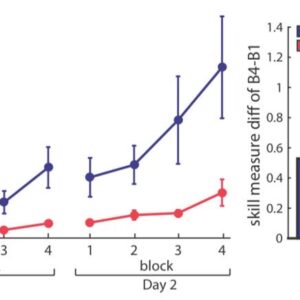
These maladaptive patterns can become encoded and reused long after fatigue has passed, slowing recovery and increasing reinjury risk (Branscheidt, 2019).
➡️ Especially in early rehab, avoid learning-based tasks under fatigue — they may engrain compensatory strategies instead of rebuilding proper control.
🧠 Fatigue and Motor Learning Compete in the Cerebellum
New research shows that fatigue perception and motor control draw on the same cerebellar resources (Casamento-Moran, 2023).
After fatiguing tasks, reduced cerebellar excitability was linked to lower perceived fatigue — but also poorer movement precision.
In short: the cerebellum might prioritize fatigue regulation over motor control under stress.
This means learning motor skills during fatigue could sacrifice movement quality, slow progress, and increase the risk of recurrence.

🚨 In ACL rehab, this has critical implications.
Post-ACLR patients already have reduced cerebellar excitability (Grooms, 2017). If we impose too much fatigue — especially during hypertrophy phases — we may worsen the neuroplastic deficits we’re trying to fix.
🚧 Motor Learning Requires a Ready Brain
Several studies show fatigue impairs motor memory and retention:
- Roig et al. (2012): Fatigue during practice reduced retention 24–48 hours later.
- Branscheidt et al. (2019): Muscle fatigue caused lasting motor errors and poor performance in subsequent sessions.
- Zabihhosseinian et al. (2020): Fatigue reduced cerebellar–motor cortex interaction, slowing motor learning and retention.
🧠 The takeaway? The more fatigued the brain, the less teachable it becomes.
⚕️ Why This Matters in Rehab
Take ACL reconstruction, for example:
- Patients already show reduced cortical excitability, impaired reflexes, and decreased motor drive (Lepley et al., 2015; Grooms et al., 2017).
- These are signs of maladaptive neuroplasticity — neural rewiring that undermines movement control.
- If we overload rehab with fatigue, we may deepen these deficits.
“Rehabilitation that ignores neural recovery risks hard-wiring compensatory strategies that may increase injury risk.” (Faltus et al., 2020)
🔑 Practical Takeaways for Coaches and Therapists
✅ Recognize that fatigue = reduced neural readiness and impaired learning potential.
✅ Skill acquisition is most effective when the brain is fresh, not under central fatigue.
✅ Manage fatigue as carefully as mechanical load — especially in early rehab.
✅ Use microdosing: short, high-quality bouts of motor training to promote retention without overload.
✅ Incorporate neurocognitive training to rewire faulty patterns — not just build strength.
✅ Focus on restoring motor drive and reflexive control, not just hypertrophy.
✅ Monitor signs of central fatigue: inconsistent technique, slower bar speeds, delayed reactions, reduced coordination, RSI trends. New tools like myotensiography offers real-time insights into muscle contractile properties, helping detect neuromuscular fatigue before it shows up in performance. It’s a new way to monitor neural readiness and personalize load.
✅ Periodize for the Nervous System, Not Just the Muscle
Early rehab should prioritize neuromuscular training and motor learning, not metabolic stress. When movement quality and control are restored, you can gradually layer in metabolic conditioning through sport-specific drills.
Plan heavier metabolic loads when ample recovery is available — for example, before a scheduled day off. Smart periodization respects both physical and neural recovery, optimizing performance without reinforcing compensatory patterns.
🧭 The Big Picture
Whether you’re guiding rehab or training peak performers:
It’s not just about doing more.
It’s about teaching the nervous system to move better.
And for that, the brain must be ready to learn.
📚 Key References
- Gandevia SC. Spinal and supraspinal factors in human muscle fatigue. Physiol Rev. 2001;81(4):1725–1789.
- Enoka RM, Duchateau J. Translating fatigue to human performance. Med Sci Sports Exerc. 2016;48(11):2228–2238.
- Roig M et al. Exercise-induced fatigue and motor skill retention. J Sports Sci. 2012;30(1):55–65.
- Branscheidt M et al. Fatigue disrupts motor skill learning. eLife. 2019;8:e40578.
- Faltus J et al. Neuroplasticity and ACL rehab. Curr Sports Med Rep. 2020;19(2):76–83.
- Casamento-Moran A et al. Cerebellar excitability and fatigue. J Neurosci. 2023;43(17):3094–3106.

