Hamstring Progression Series

This progressive training series introduces four key exercises designed to strengthen the hamstrings in functional, sprint-specific contexts. Each exercise targets neuromuscular control, pelvic mechanics, posterior chain strength, and long-length loading—critical elements for both performance and injury reduction.


Exercise 1: Good Morning

To begin the series, we start with the Good Morning — a foundational hip-hinge movement ideal for developing hamstring strength at long muscle lengths.
Before progressing to more complex variations, this exercise lays the groundwork by providing three essential benefits:

✔️ Strengthening the hamstrings in a lengthened position: The eccentric, stretch-loaded nature of the good morning promotes adaptations that may increase fascicle length, improving the muscle’s ability to tolerate high forces and potentially reducing injury risk (Vigotsky 2015)

✔️ Building posterior chain strength and resilience: The movement effectively activates the hamstrings, glutes, and spinal erectors, creating a strong foundation for more advanced patterns (McAllister 2014, Jaeggi 2024)

✔️ Preparing the neuromuscular system: Ideal for building technical control, intermuscular coordination and hip-hinge strength for more complex, unilateral movements (Llurda-Almuzara 2021).

This makes the good morning not just a strength builder, but also a valuable tool in injury prevention strategies.

And this is just the first step. In the next phases of the series, we’ll explore progressions that challenge balance and neuromuscular control, and integrate pelvic control strategies — essential for improving running mechanics and overall performance.


Exercise 2: Single-Leg Romanian Deadlift

After establishing basic long-length strength and hinge mechanics, we progress to the Single-Leg RDL — one of the most researched and effective hamstring exercises.
Its value comes from how it integrates multiple sprint-relevant qualities, making it much more than a unilateral hinge.


✔️ Posterior Chain Power: The SL RDL activates the glutes more than many other hamstring drills — even surpassing high-speed running activation (Prince 2014; Van Hooren 2022).

✔️ Eccentric Hamstring Strength: It develops eccentric strength at long muscle lengths, with high activity in the biceps femoris and other key muscles (McAllister 2014; Van Hooren 2022).

✔️ Tendon Loading & MTJ Resilience: The RDL places substantial load on the tendinous tissue of the biceps femoris long head (Chen 2023). By enhancing elastic energy storage and release, it prepares the hamstrings for the extreme forces of sprinting — addressing a key injury risk: mismatches between stiff fascicles and compliant tendons at the muscle–tendon junction (Bayrak & Yilgor Huri 2018; Kim & Kim 2022; Huygaerts et al. 2021).

✔️ Pelvic Control for Sprinting: It challenges athletes to transition from anterior to posterior pelvic tilt under load — a crucial sprint mechanic that also reduces adductor strain (Sado 2017, 2019).

✔️ Balance & Stability with Overload: The single-leg stance develops sport-specific stability and proprioception, but instability often reduces prime mover activation. The Keiser ProSquat provides controlled stability, allowing athletes to maintain single-leg specificity while truly overloading the hamstrings.

The Single-Leg RDL is not just a hamstring exercise, but a bridge between hip-dominant strength, sprint mechanics, and injury resilience.


Exercise 3: SL RDL with Ankle–Foot Complex

Once the unilateral hinge is solid, we add a key element: intrinsic foot–ankle activation. Here, the toe presses down against a sideways pull from an elastic band.

🔑 Why? Because the ankle–foot complex is the base of movement. When engaged properly, it helps to:

✔️ Control foot posture and longitudinal arch stiffness (Kelly et al., 2014)
✔️ Control big-toe motion (Hashimoto & Sakuraba, 2014)
✔️ Improve arch function and propulsive force in running (Taddei et al., 2020)
✔️ Enhance balance, stability, and performance when integrated into training (Jaffri et al., 2023)

The foot–ankle complex isn’t passive. It stores and releases elastic energy, dictates how effectively force travels through the leg, and serves as the foundation of frontside running mechanics (McKeon et al., 2015).

Training hamstrings together with the foot–ankle system means we’re preparing the athlete for real movement mechanics, not isolated strength. We address the entire kinetic chain — from pelvic control down to the foot.

👉 As McKeon et al. (2015) highlighted, intrinsic foot muscles are often ignored in both training and rehab, with interventions focusing more on external support than training the muscles to function as they are designed. This exercise directly addresses that gap.


Exercise 4: Single-Leg RDL to Step-Up

With strength, balance, and foot control established, we now integrate sprint components. This variation enhances running mechanics and hamstring resilience at long muscle lengths.

🔑 Key evidence: Developing posterior pelvic tilt (PPT) control with gym-based eccentric exercises produces greater improvements in sprint kinematics than high-volume technique drills (Mendiguchia 2022; Alt 2021). This highlights the role of strength work that teaches dynamic pelvic control — not just cueing on the track.

Why this variation?

✔️ Mimics the 2-step sprint sequence (hinge → drive)
✔️ Demands explosive PPT, which generates large hip joint forces and drives efficient power transfer (Sado 2017, 2019)

⚠️ Without good pelvic control, athletes slip into excessive anterior pelvic tilt during sprinting, which over-lengthens the hamstrings and raises their tension (≈ ST +13%, SM +26%, BF +31.5%; Nakamura 2016) — increasing both demand and injury risk.

➡️ The goal isn’t just a strong hamstring — it’s a hamstring that delivers explosive power in the right sequence, and under the right control for maximal sprint efficiency and resilience.

Neuromuscular Fatigue: The Silent Saboteur of Rehab Progress

Why do some athletes relapse into injury even after regaining full strength?
Why do ACL patients still move asymmetrically despite months of rehab?
The answer may lie in the brain, not the muscle.

🧠 Fatigue doesn’t just reduce performance — it rewires how the brain learns movement.
And when we ignore this in training or rehab, we risk hard-wiring inefficient patterns.

In this month’s newsletter, we explore how fatigue disrupts neuroplasticity, impacts motor control, and slows skill acquisition. Whether you’re rebuilding an ACL, reconditioning a player, or coaching high performers — this insight could change your approach.

🧠 Fatigue Impairs the Brain Before the Muscle

We tend to think of fatigue as purely muscular. But in reality, the nervous system fatigues first.

  • Central fatigue decreases voluntary motor drive, alters cortical excitability, and reduces reflex activity (Gandevia, 2001; Enoka & Duchateau, 2016).
  • This matters because learning or relearning movement patterns depends on the brain’s capacity to reorganize motor maps and integrate sensory feedback.
    When the brain is fatigued, those adaptations don’t occur efficiently.

🧠 Fatigue Can Hard-Wire Faulty Movement Patterns

Fatigue doesn’t just impair performance — it changes how movement is learned.
Due to reduced motor cortex and corticospinal excitability, the nervous system underestimates force, leading to overshooting and imprecise movement.
These maladaptive patterns can become encoded and reused long after fatigue has passed, slowing recovery and increasing reinjury risk (Branscheidt, 2019).

➡️ Especially in early rehab, avoid learning-based tasks under fatigue — they may engrain compensatory strategies instead of rebuilding proper control.

🧠 Fatigue and Motor Learning Compete in the Cerebellum

New research shows that fatigue perception and motor control draw on the same cerebellar resources (Casamento-Moran, 2023).
After fatiguing tasks, reduced cerebellar excitability was linked to lower perceived fatigue — but also poorer movement precision.

In short: the cerebellum might prioritize fatigue regulation over motor control under stress.
This means learning motor skills during fatigue could sacrifice movement quality, slow progress, and increase the risk of recurrence.

🚨 In ACL rehab, this has critical implications.
Post-ACLR patients already have reduced cerebellar excitability (Grooms, 2017). If we impose too much fatigue — especially during hypertrophy phases — we may worsen the neuroplastic deficits we’re trying to fix.

🚧 Motor Learning Requires a Ready Brain

Several studies show fatigue impairs motor memory and retention:

  • Roig et al. (2012): Fatigue during practice reduced retention 24–48 hours later.
  • Branscheidt et al. (2019): Muscle fatigue caused lasting motor errors and poor performance in subsequent sessions.
  • Zabihhosseinian et al. (2020): Fatigue reduced cerebellar–motor cortex interaction, slowing motor learning and retention.

🧠 The takeaway? The more fatigued the brain, the less teachable it becomes.

⚕️ Why This Matters in Rehab

Take ACL reconstruction, for example:

  • Patients already show reduced cortical excitability, impaired reflexes, and decreased motor drive (Lepley et al., 2015; Grooms et al., 2017).
  • These are signs of maladaptive neuroplasticity — neural rewiring that undermines movement control.
  • If we overload rehab with fatigue, we may deepen these deficits.

“Rehabilitation that ignores neural recovery risks hard-wiring compensatory strategies that may increase injury risk.” (Faltus et al., 2020)

🔑 Practical Takeaways for Coaches and Therapists

✅ Recognize that fatigue = reduced neural readiness and impaired learning potential.
✅ Skill acquisition is most effective when the brain is fresh, not under central fatigue.
✅ Manage fatigue as carefully as mechanical load — especially in early rehab.
✅ Use microdosing: short, high-quality bouts of motor training to promote retention without overload.
✅ Incorporate neurocognitive training to rewire faulty patterns — not just build strength.
✅ Focus on restoring motor drive and reflexive control, not just hypertrophy.
✅ Monitor signs of central fatigue: inconsistent technique, slower bar speeds, delayed reactions, reduced coordination, RSI trends. New tools like myotensiography offers real-time insights into muscle contractile properties, helping detect neuromuscular fatigue before it shows up in performance. It’s a new way to monitor neural readiness and personalize load.

✅ Periodize for the Nervous System, Not Just the Muscle
Early rehab should prioritize neuromuscular training and motor learning, not metabolic stress. When movement quality and control are restored, you can gradually layer in metabolic conditioning through sport-specific drills.
Plan heavier metabolic loads when ample recovery is available — for example, before a scheduled day off. Smart periodization respects   both physical and neural recovery, optimizing performance without reinforcing compensatory patterns.

🧭 The Big Picture

Whether you’re guiding rehab or training peak performers:
It’s not just about doing more.
It’s about teaching the nervous system to move better.
And for that, the brain must be ready to learn.


📚 Key References

  • Gandevia SC. Spinal and supraspinal factors in human muscle fatigue. Physiol Rev. 2001;81(4):1725–1789.
  • Enoka RM, Duchateau J. Translating fatigue to human performance. Med Sci Sports Exerc. 2016;48(11):2228–2238.
  • Roig M et al. Exercise-induced fatigue and motor skill retention. J Sports Sci. 2012;30(1):55–65.
  • Branscheidt M et al. Fatigue disrupts motor skill learning. eLife. 2019;8:e40578.
  • Faltus J et al. Neuroplasticity and ACL rehab. Curr Sports Med Rep. 2020;19(2):76–83.
  • Casamento-Moran A et al. Cerebellar excitability and fatigue. J Neurosci. 2023;43(17):3094–3106.

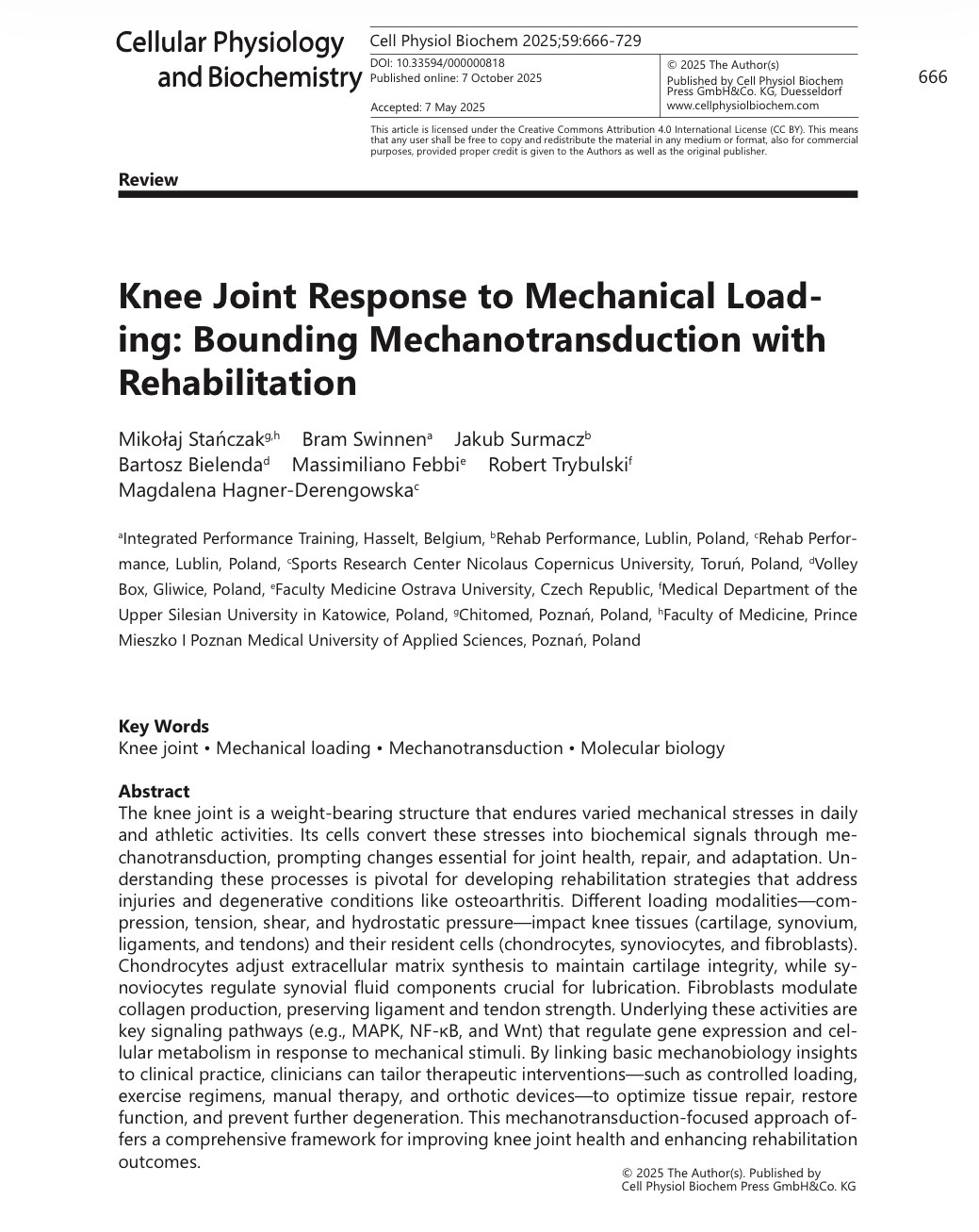
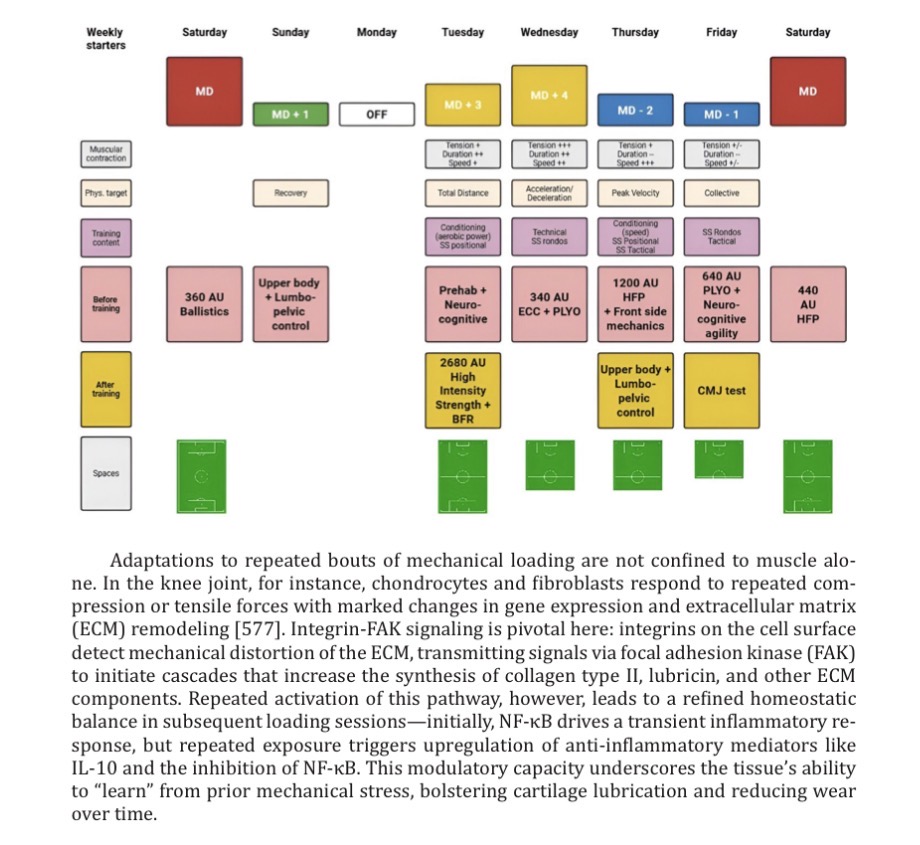
The Knee and Mechanical Loading: A Mechanotransduction-Based Framework for Rehabilitation

Tissue doesn’t adapt to exercises — it adapts to mechanical signals.

How mechanotransduction explains what truly drives knee recovery.

I’m proud to share our new publication on knee mechanotransduction and rehabilitation.

Together with Mikołaj Stańczak, Jakub Surmacz, Bartosz Bielenda, Prof.Dr. Massimiliano Febbi PhD, Robert Tribulski, Magdalena Hagner-Derengowska, we explored one key question:

How can mechanical loading — at the molecular level — accelerate knee rehabilitation?

Because rehab isn’t only about exercises.
It’s about delivering the right mechanical signal at the right biological time.

Different tissues — cartilage, synovium, meniscus, tendons, ligaments — all respond in very specific ways to load.
That’s why we argue for stage-specific mechanobiology:

🔁 Match the loading strategy to the phase of healing — inflammation, proliferation, remodeling.
This is how you optimize tendon, ligament and cartilage recovery instead of guessing with sets and reps.

🧩 What makes this review practical?
We translated molecular mechanisms into clinical tools:

✔️ Clear loading windows for under-loaded, optimal and overloaded tissue
✔️ Strength & plyometric guidelines per healing phase
✔️ How to dose early loading after ACL, meniscus or tendon injuries
✔️ How manual therapy + exercise interact through mechanotransduction
✔️ How controlled mechanical stress prevents long-term joint degeneration

The goal:
👉 Build smarter rehab, not more rehab.
👉 Give tissues the mechanical signal they need — exactly when they can use it.

If you work in physiotherapy, sports medicine or performance, this framework will help you design more precise and effective loading progressions.


Full article link


Prevention & Rehab of Hamstring Injuries

FMP Article: Rehab & Prevention of Hamstring Injuries


Prevention and rehab of hamstring injuries


Introduction


Hamstring injuries are a major problem in sports. There is a especially a high prevalence in sports that require a lot of sprints, jumps and kicks such as football, rugby, track and field and basketball. Hamstring injuries also have a high propensity for re-injury. One-third of the injuries will recur with the greatest risk during the initial two weeks following return to sport (Orchard et al. 2002). The risk for re-injury remains elevated for at least a year and the subsequent injury is often more severe than the original strain (Warren et al. 2010). In some cases a strained hamstring can cause long-term problems and have a severe impact on a player’s career. The very high risk to recur in the early phase after returning to sport suggests that most rehabilitation plans are inadequate. To design effective rehabilitation programs several questions need to be posed and answered. What are the risk factors that increase the hamstring injury rate and how the training or rehab plan can have an impact on these risk factors? A previous hamstring strain is probably the most important risk factor for future injury. Which muscle properties are altered following a hamstring strain and why do they put the athlete at a higher risk for recurrence when he returns to play? Which exercise selection and training parameters can help prevent injury or are important in the rehabilitation in order to avoid re-injury?


Risk factors


Strength imbalances, bilateral asymmetries and fatigue:

During sprinting and kicking the hamstrings have to brake the knee extension generated by the quadriceps muscles (Chumanov et al. 2012). Because the quads are stronger than the hamstrings, the hamstrings will become fatigued faster. Strength imbalances between both muscle groups will result in a faster decrease of the eccentric knee flexor torque and increase the risk for hamstring strain (Croisier et al. 2008).

Fatigue: Hamstring injuries are more likely to occur at the latter stages of a game (Woods et al. 2004, Ekstrand et al. 2011a, Greig et al. 2009). Eccentric hamstring strength decreases with playing time. The fatigue effect is also speed dependent. Faster running speeds result in a greater decrease of the peak eccentric hamstring torque (Greig et al. 2009). The decreased ability of the hamstring muscles to generate force reduces the energy absorption capacity and predisposes them to strain-type injuries (Garrett 1990).

Core instability: The force and stretch of the iliopsoas during the late stance phase and early swing phase induces an increased anterior tilt of the pelvis. This anterior pelvic tilt results in a greater hamstring stretch of the opposite limb, which is simultaneously in the late swing phase. Increased pelvic tilting when sprinting, due to core instability and compromised pelvic control, results in greater musculotendon stretch and strain of the hamstring muscles during the terminal swing phase (Chumanov et al. 2007).

Weak or inhibited gluteal muscles: Shirley Sahrmann says that anytime you see an injured muscle you need to look for a weak synergist. A synergist is a muscle that performs the same movement or function. Due to delayed gluteus maximus activity, the hamstring muscles become dominant during hip extension, which can cause hamstring strains (Sahrmann 2002).

The gluteus maximus and long head of the biceps femoris play an important role in stabilizing the pelvis. Pelvic instability can alter the muscle activation timing and the load transfer through the sacro-iliacal joint (Leinonen et al. 2000, Nelson-Wong et al. 2012, Janda 1985).


Function of the hamstring muscles during sprinting


The majority of hamstring injuries occur during the late swing phase of running and eighty percent of the hamstring strains affect the long head of the biceps femoris (Koulouris et al. 2003, Chumanov et al. 2007).

During this phase the knee extends while the hip is in flexion, lengthening the bi-articular hamstrings over both joints they cross. The hamstring muscles lengthen and contract eccentrically to brake the knee extension of the swing leg (Chumanov et al. 2012).

Just before foot-strike the hamstrings reach peak force and peak lengths (Simonsen et al. 1985, Thelen et al. 2005a, Thelen et al. 2005b, Wood 1987, Yamaguchi et al. 1989, Schache et al. 2009). At high speeds the EMG activity of the hamstring muscles during the terminal swing phase have been shown to exceed the activity of a maximal voluntary contraction (Kyrolainen et al. 1999).

Because of the differences in hip extension (origin on the pelvis) and knee flexion moment arms (insertion on the tibia), peak lengths are significantly larger in the long head of the biceps femoris, than the semitendinosus and semimembranosus (Thelen et al. 2005a). The greater incurred musculotendon stretch by the biceps femoris may contribute to its tendency to be more often injured than the other 2 hamstring muscles (Thelen et al. 2005a).

Peak lengths do not increase significantly with faster sprinting speeds, while hamstring muscle force and power steadily increase with speed (Chumanov et al. 2007, Chumanov et al. 2011, Thelen et al. 2005a, Schache et al. 2010).


Altered muscle properties and higher risk for recurrence


Previous hamstring injury has been associated with a shifted length-tension curve towards shorter muscle lengths and reduced eccentric hamstring strength towards full knee extension (Brockett et al. 2004). This indicates that after a hamstring strain the hamstring muscles can produce their greatest force at shorter muscle lengths compared to the pre-injury state. This also means that the end-range strength of the hamstrings is reduced. The presence of scar tissue at the site of the injury might be responsible for the shift of peak torque towards shorter muscle lengths (Kaariainen et al. 2000). Scar tissue is less compliant than contractile tissue and can therefore alter the mechanical properties of the muscle (Butler et al. 2004).

Because the peak force during sprinting occurs at longer muscle lengths, a shifted peak torque towards shorter lengths and reduced end-range strength place the muscle at a higher risk for re-injury (Brockett et al. 2004). This is probably a major cause of the very high recurrence rate during the first month after returning to play. Because the scar tissue is less compliant than muscle tissue, extensive scarring requires the muscle fibers in proximity of the scar tissue to lengthen a greater amount to reach the same overall muscle length (Butler et al. 2004). Because the muscle region near the scar tissue is subjected to higher strain, re-injuries mostly occur near the site of prior injury.


Another reason for the reduced end range eccentric hamstring strength is a decreased activation of the biceps femoris towards full knee extension (Sole et al. 2011). A lot of athletes return to sport with inhibition and selective atrophy of the long head of the biceps (Silder et al. 2008, Croisier et al. 2002). the strength abnormalities and scar tissue remodeling and hence an elevated risk of re-injury can persist a lot longer than 6 months after the initial muscle strain (Silder et al. 2008, Croisier et al. 2002). This emphasizes the importance of functional loading and progressive rehabilitation programs.


Eccentric hamstring strengthening


Strengthening the hamstring muscles eccentrically in an elongated range of motion should therefore form an important part of rehab or training (Brockett et al. 2004, Arnason et al. 2008, Askling et al. 2003, Gabbe et al. 2006, Petersen et al. 2011). Eccentric training has been shown to shift the force-length curve to longer muscle lengths (Schmitt et al. 2012, Brockett et al. 2001, Brughelli et al. 2010, Brughelli et al. 2009, Kilgallon et al. 2007). Eccentric training has been shown to shift the force-length curve to longer muscle lengths, so that the optimal muscle length gradually shifts to the zone in which the hamstrings are primarily operating. (Schmitt et al. 2012, Brockett et al. 2001, Brughelli et al. 2010, Brughelli et al. 2009, Kilgallon et al. 2007). Not only eccentric training, but also regular strength training using exercises that are more challenging at lengthened ranges of motion can shift peak torque towards greater muscle lengths (Goldspink et al. 1999, Seynnes et al. 2007).

An eccentric training program has been shown to substantially reduce the incidence of new (60%) and recurrent (85%) hamstring injuries of soccer players (Thorborg 2012). After only 10 days of eccentric hamstring training a shift of the peak torque towards greater muscle lengths has been detected (Brockett et al. 2004, Brockett et al. 2001, Brughelli et al. 2010, Brughelli et al. 2009, Seynnes et al. 2007). Static flexibility programs have been shown unable to influence the length-tension relationship and are therefore ineffective to prevent hamstring strains (Arnason et al. 2008).


Re-activating the long head of the biceps femoris


Rehabilitation programs also need to focus on the re-activation of the long head of the biceps femoris muscle to counter the inhibition and atrophy associated with hamstring injury. The long head of the biceps femoris is a thick muscle with a large cross-sectional area and short, pennate fibers, especially suited for high force contractions over a shorter distance (Lieber et al. 1993, Kellis et al. 2012, Makihara et al. 2006). During the stance phase of running the hamstring muscles have to contract forcefully while there is less change in muscle length because of the simultaneous hip and knee extension. This is in accordance with research that revealed the forward lunge, which involves simultaneous knee and hip extension, especially loads the long head of the biceps femoris (Mendiguchia et al. 2013). Exercises which leg action is similar to the stance phase of running, like a resisted slide-board back lunge, a step-up or a walking lunge can counter the inhibition and atrophy associated with hamstring injury. It is therefore recommended to integrate hip-dominant exercises, such as the lunge, in which the length of the hamstrings remains more or less constant into every athlete’s rehabilitation and training schedule.


Horizontal force production


Acceleration speed is an important characteristic of performance in team sports. Recent literature shows that the ability to generate large amounts of horizontal force is more important for acceleration than vertical force production (Rabita 2015).On return to sport after hamstring injury, athletes are slower and demonstrate substantially lower horizontal force and power outputs during sprinting (Mendiguchia et al. 2014). This inability to produce a high level of horizontal force is probably related to the inhibition of the long head of the biceps femoris and stresses the importance of hamstring exercises that mimic the muscle actions during a sprint. Clear decreases in horizontal force production capacity during sprint acceleration have been demonstrated after hamstring injuries in football players (Roksund 2017). Research also indicates that a reduced ability to produce horizontal force during the acceleration phase of sprinting is indicative of an increased risk of hamstring injuries (Edouard 2021). Athletes should integrate exercises that train horizontal force production from both a performance and injury prevention point of view.However, many traditional lower body strength exercises, such as squats, Olympic lifts, and deadlifts, primarily train vertical force production.


Re-activating the gluteus maximus and enhancing intermuscular coordination


The gluteus maximus is a very powerful hip extensor and also plays an important role in the stabilization of the lumbo-pelvic region. Pelvic instability, back pain or other lower body injuries can alter the muscle activation timing (Leinonen et al. 2000, Nelson-Wong et al. 2012, Janda 1985). The hamstring muscles then become dominant during hip extension as a result of gluteal inhibition or weakness (Sahrmann 2002). Hip extension is initiated by the hamstrings and erector spinae while the activation of the gluteus maximus is delayed (Leinonen et al. 2000, Nelson-Wong et al. 2012, Janda 1985). The gluteus maximus should be the primary hip extensor. Diminished gluteal function will place a higher load on the hamstrings and increases the risk of hamstring injury. Training the hamstrings in isolation only increases the load on the (in many cases already tired) hamstrings without promoting the correct coordination patterns between glutes and hamstrings. Rehabilitation programs for hamstring injury should focus on restoring proper coordination patterns, consist of exercises that (re-)activate the glutes and enhance the intermuscular coordination between the glutes and hamstrings. An example of such an exercise is the Resisted back lunge (fig. 9) against resistance. The gluteus maximus is especially active during activities that involve a vigorous hip extension such as sprinting or climbing stairs (Zimmermann et al. 1994). Stabilizing the trunk and pelvis against gravity also requires a strong glute contraction (Marzke et al. 1988). The pull of the cable during the Resisted back lunge (fig. 9) creates a hip flexion force against which the gluteus maximus has to stabilize. The movement also mimics the hip action during running. As in sprinting, the body should be pulled over the foot through a powerful hip extension. The one-legged stance also enhances the activation of the gluteus medius and maximus.  Explosive posterior pelvic tilt The pelvis is an essential segment in the proximal-to-distal sequencing of explosive movements (Shan 2005). An explosive backward tilt of the pelvis allows greater force production at the hip level and facilitates an efficient power transfer during sprinting (Sado 2019). The inability to maintain a stable posterior pelvic tilt during sprinting causes premature hamstring fatigue, increases injury susceptibility, and impairs sprint biomechanics (Small 2009).The differences in efficiency between a neutral and anterior pelvic tilt are related to the technique. An anterior pelvic tilt during sprinting results in too high a heel lift, a foot contact too far in front of the body’s center of gravity at the end of the swing phase, and longer contact times. This is also referred to as back side running mechanics. When the pelvis is in a more neutral position, the high knee action results in more active ground contact, closer to the body’s center of gravity, resulting in shorter contact times and higher ground reaction forces; the so-called front side running mechanics.  The final stage of hamstring rehabilitation  The last phase of hamstring rehabilitation determines the success and the chance of recurrence. Plyometric and ballistic exercises with a horizontal force vector, resisted sprinting and stair sprints are essential to make the transition to full sprint speed.Resisted sprinting and horizontal-vector plyometrics, such as the alternate leg bound and speed hop, approximate the joint angular velocity of sprinting, but with less hamstring extension (Osterwald 2021). These movements train correct intersegmental control, proximal-to-distal sequencing of rapid movements, and intermuscular coordination. The biceps femoris consists of a higher percentage of fast fibers that are preferentially recruited during explosive movements (Evangelidis 2017). Plyometric and ballistic exercises with a horizontal force vector, resisted sprinting and stair sprints maximally activate the biceps femoris and develop horizontal force and sprint speed. These exercises, together with a progressive partial integration in sports training, will facilitate a successful return-to-play.  Selection of most efficient hamstring exercises from a biomechanical perspective The single-leg RDL (fig.1), Roman chair hamstring curl (fig.2) and the Nordics (fig.3) are the best exercises to improve eccentric hamstring strength at an elongated ROM (McAllister 2014). These exercises change the optimal length of the hamstrings so that they can produce greater forces with longer muscle lengths (Opar et al. 2012). This is important because the hamstrings function at greater muscle lengths during sprinting (Chumanov et al. 2007).

Figuur 1: Single-leg RDL

Figuur 2: Roman chair hamstring curl

Figuur 3: Nordics


The single-leg RDL & high pull (fig. 4), the Roman chair hamstring curl (fig. 2), the Keiser acceleration (fig. 5) and Horizontal step-up (fig. 6) require an explosive posterior pelvic tilt or the ability to maintain a stable posterior pelvic tilt. An explosive posterior tilt allows large joint forces at the hip and facilitates an efficient power transfer during sprinting (Sado 2019).

Figuur 4: Single-leg RDL & high pull

Figuur 5: Keiser acceleration

Figuur 6: Horizontal step-up


The Horizontal step-up (fig.6) and Keiser acceleration (fig.5) will help improve horizontal force production. An improved ability to produce horizontal force increases acceleration speed and reduces the risk of hamstring injuries (Rabita et al. 2015, Roksund et al. 2017). The eccentric RDL slam (fig.7) and hip extension plyos (fig.8) are plyometric exercises specifically targeting the hamstrings. A hamstring injury is a high speed injury. The hamstrings function at high contraction rates during sprinting (Chumanov et al. 2007). Plyometric hamstring exercises improve the energy-absorbing capacity of the hamstrings at the speed-end of the spectrum (Swinnen 2016).

Figuur 7: Eccentric RDL slam

Figuur 8: Hip extension plyos


The Resisted slideboard back lunge (fig.9) is a very effective exercise to strengthen the hamstrings and gluteal muscles. This exercise improves horizontal force production and inter-muscular coordination between the glutes and hamstrings.

Figuur 9: Resisted slideboard back lunge


Conclusion


In summary, hamstring injuries are a significant concern in sports, and their high recurrence rate necessitates comprehensive prevention and rehabilitation strategies. Addressing risk factors such as strength imbalances, fatigue, core instability, and inhibited gluteal muscles is essential. Understanding the biomechanics of hamstring function during sprinting and the impact of altered muscle properties post-injury is crucial for effective rehabilitation. Incorporating eccentric hamstring strengthening, re-activating the biceps femoris and gluteus maximus, enhancing intermuscular coordination, and focusing on horizontal force production are key components of successful rehabilitation. The final stage involves plyometric and ballistic exercises to transition athletes back to full sprint speed, ultimately promoting a successful return to play. By addressing these factors, athletes can reduce the risk of hamstring injuries, enhance their overall performance, and extend their careers in sports.


References

Brockett CL, Morgan DL, Porske U. Predicting hamstring strain injury in elite athletes. Med Sci Sports Exerc. 2004 Mar;36(3):379-87.

Chumanov ES, Heiderscheit BC, Thelen DG. The effect of speed and influence of individual muscles on hamstring mechanics during the swing phase of sprinting. J Biomech. 2007;40(16):3555-62.

Chumanov ES, Schache AG, Heiderscheit BC, Thelen DG. Hamstrings are most susceptible to injury during the late swing phase of sprinting. Br J Sports Med. 2012 Feb;46(2):90.

Croisier JL, Ganteaume S, Binet J, Genty M, Ferret JM. Strength imbalances and prevention of hamstring injury in professional soccer players: a prospective study. Am J Sports Med. 2008 Aug;36(8):1469-75.

Edouard P, Lahti J, Nagahara R, Samozino P, Navarro L, Guex K, Rossi J, Brughelli M, Mendiguchia J, Morin JB. Low Horizontal Force Production Capacity during Sprinting as a Potential Risk Factor of Hamstring Injury in Football. Int J Environ Res Public Health. 2021 Jul 23;18(15):7827.

Ekstrand J, Hagglund M, Walden M. Injury incidence and injury patterns in professional football: the UEFA injury study. Br J Sports Med 2011a;45:553-8.

Evangelidis PE, Massey GJ, Ferguson RA, Wheeler PC, Pain MTG, Folland JP. The functional significance of hamstrings composition: is it really a “fast” muscle group? Scand J Med Sci Sports. 2017 Nov;27(11):1181-1189.Kaariainen M, Jarvinen T, Jarvinen M, Rantanen J, Kalimo H. Relation between myofibers and connective tissue during muscle injury repair. Scand J Med Sci Sports. 2000 Dec;10(6):332-7.

Kyrolainen H, Komi PV, Belli A. Changes in muscle activity patterns and kinetics with increasing running speed. J Strength Cond Res. 1999 Nov;13(4):400-6.

Leinonen V, Kankaanpää M, Airaksinen O, Hänninen O. Back and hip extensor activities during trunk flexion/extension: effects of low back pain and rehabilitation. Arch Phys Med Rehabil. 2000 Jan;81(1):32-7.

Marzke MW, Longhill JM, Rasmussen SA. Gluteus maximus muscle function and the origin of hominid bipedality. Am J Phys Anthropol. 1988 Dec;77(4):519-28.

McAllister MJ, Hammond KG, Schilling BK, Ferreria LC, Reed JP, Weiss LW. Muscle activation during various hamstring exercises. J Strength Cond Res. 2014 Jun;28(6):1573-80.

Nelson-Wong E, Alex B, Csepe D, Lancaster D, Callaghan JP. Altered muscle recruitment during extension from trunk flexion in low back pain developers. Clin Biomech. 2012 Dec;27(10):994-8.

Opar DA, Williams MD, Shield AJ. Hamstring strain injuries: factors that lead to injury and re-injury. Sports Med. 2012 Mar;42(3):209-26.

Osterwald KM, Kelly DT, Comyns TM, Catháin CÓ. Resisted Sled Sprint Kinematics: The Acute Effect of Load and Sporting Population. Sports (Basel). 2021 Sep 30;9(10):137.

Rabita G, Dorel S, Slawinski J, Sàez-de-Villarreal E, Couturier A, Samozino P, Morin JB. Sprint mechanics in world-class athletes: a new insight into the limits of human locomotion. Scand J Med Sci Sports. 2015 Oct;25(5):583-94.

Røksund OD, Kristoffersen M, Bogen BE, Wisnes A, Engeseth MS, Nilsen AK, Iversen VV, Mæland S, Gundersen H. Higher Drop in Speed during a Repeated Sprint Test in Soccer Players Reporting Former Hamstring Strain Injury. Front Physiol. 2017 Jan 27;8:25.

Sado N, Yoshioka S, Fukashiro S. A biomechanical study of the relationship between running velocity and three-dimensional lumbosacral kinetics. J Biomech. 2019 Sep 20;94:158-164

Schache AG, Wrigley TV, Baker R, Pandy MG. Biomechanical response to hamstring muscle strain injury. Gait Posture. 2009 Feb;29(2):332-8.

Schache AG, Kim HJ, Morgan DL, Pandy MG. Hamstring muscle forces prior to and immediately following an acute sprinting-related muscle strain injury. Gait Posture 2010 May;32(1):136-40.

Shan G, Westerhoff P. Full-body kinematic characteristics of the maximal instep soccer kick by male soccer players and parameters related to kick quality. Sports Biomech. 2005 Jan;4(1):59-72.

Silder A, Heiderscheit BC, Thelen DG, Enright T, Tuite MJ. MR observations of long-term musculotendon remodeling following a hamstring strain injury. Skeletal Radiol. 2008 Dec;37(12):1101-9.

Small K, McNaughton LR, Greig M, Lohkamp M, Lovell R. Soccer fatigue, sprinting and hamstring injury risk. Int J Sports Med. 2009 Aug;30(8):573-8.

Sole G, Milosavljevic S, Nicholson HD, Sullivan SJ. Selective strength loss and decreased muscle activity in hamstring injury. J Orthop Sports Phys Ther. 2011 May;41(5):354-63.

Swinnen B. Strength training for soccer. Routledge. 2016; 190-1.

Thelen DG, Chumanov ES, Hoerth DM, Best TM, Swanson SC, Li L, Young M, Heiderscheit BC. Hamstring muscle kinematics during treadmill sprinting. Med Sci Sports Exerc. 2005a Jan;37(1):108-14.

Thorborg K. Why hamstring eccentrics are hamstring essentials. Br J Sports Med. 2012;46:463–5.

to injury during the late swing phase of sprinting. Br J Sports Med. 2012 Feb;46(2):90.

Warren P, Gabbe BJ, Schneider-Kolsky M, Bennell KL. Clinical predictors of time to return to competition and of recurrence following hamstring strain in elite Australian footballers. Br J Sports Med. 2010 May;44(6):415-9.

Zimmermann CL, Cook TM, Bravard MS, Hansen MM, Honomichl RT, Karns ST, Lammers MA, Steele SA, Yunker LK, Zebrowski RM. Effects of stair-stepping exercise direction and cadence on EMG activity of selected lower extremity muscle groups. J Orthop Sports Phys Ther. 1994 Mar;19(3):173-80.